

Pet travel to and from Roatán
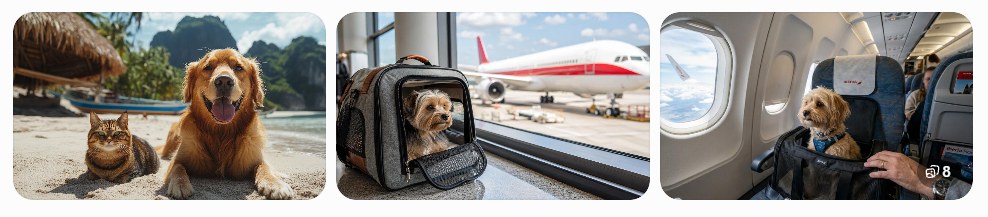
A step-by-step guide for pet owners traveling to and from the Bay Islands, Honduras
Updated October 23, 2026 | Dogs and cats | Import, export and international return requirements
Whether you are moving to Roatán, visiting for an extended stay or returning home, international travel with pets requires advance preparation. The rules for entering Honduras are not the same as the requirements to return to the United States, Canada, the United Kingdom or Europe.
This guide provides practical steps and official resources. Always reconfirm requirements with the relevant authorities and airline before booking.
PART ONE — Bringing Your Pet to Roatán
Step 1. Determine whether an import permit is needed
Honduras regulates animal importation through SENASA (Servicio Nacional de Sanidad e Inocuidad Agroalimentaria). Under its published guidance:
| Number / type of animals | Published Honduras procedure |
|---|---|
| 1–2 personal dogs or cats | Ordinarily no advance zoosanitary import permit; health and vaccination paperwork plus inspection still required |
| 3 or more dogs or cats | Advance Zoosanitary Import Permit required |
| Commercial imports | Additional requirements and quarantine controls may apply |
| Birds, reptiles and exotic pets | Separate authorizations may apply |
SENASA’s published procedure lists an inspection fee of L525 for the one- or two-pet process. Verify current fees before departure.
Step 2. Visit your veterinarian
Start preparing about 30–60 days before your trip, or earlier if additional rabies testing is needed. Request a veterinary export health certificate accepted by Honduras.
Have the animal examined for fitness to travel.
Check vaccination dates and required boosters.
Document parasite prevention and treatment.
Verify pet identification, including microchip when relevant.
Confirm whether your origin country requires additional government certification or authentication.
Step 3. Check vaccinations
| Dogs | Cats |
|---|---|
| Rabies (for eligible age) | Rabies (for eligible age) |
| Distemper, hepatitis, parvovirus | Panleukopenia, calicivirus, rhinotracheitis |
| Leptospirosis, canine influenza | Feline leukemia |
These are vaccines named in Honduran consular guidance; veterinarians should confirm current requirements and age or medical exceptions. Preserve original records with vaccination names, dates and validity.
Step 4. Obtain the international health certificate
Schedule the final examination near the travel date, often within ten days, but follow the exact validity window required by the destination country and airline.
Original veterinary health/export certificate
Rabies and other vaccination certificates
Parasite treatment record
Microchip details, if applicable
Any origin-country endorsement, authentication or apostille required
For U.S. travelers, USDA APHIS guidance says Honduras does not require USDA endorsement of the pet health certificate; reconfirm any changing rules. Canadian travelers should verify any consular authentication procedures with CFIA and the Honduran consulate.
Step 5. Confirm transport with the airline
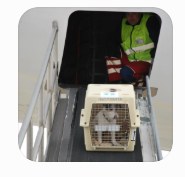
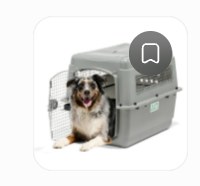
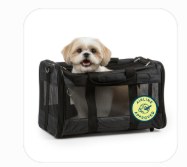
Before paying for nonrefundable tickets, secure your pet’s place for every segment, including connections.
Cabin: generally for small pets in approved under-seat carriers.
Checked/hold transportation: route, season and aircraft restrictions apply.
Manifest cargo: may be available for pets that cannot travel as baggage.
Ask about breed restrictions, size/weight limits, fees, heat embargoes and connection handling.
Step 6. Prepare the carrier
Use an airline-approved carrier appropriately sized so the animal can stand, turn and lie down naturally. Acclimate your pet before travel, ensure ventilation and identification labels, and avoid sedatives unless the veterinarian and airline specifically approve.
Step 7. Complete inspection at the Honduran entry point
Present the original health and vaccination documents.
Report to the SENASA animal quarantine inspector at the first relevant port of entry.
Make the animal available for inspection.
Pay official fees and obtain a receipt.
Follow instructions before connecting onward to Roatán, Utila or Guanaja.
Step 8. If bringing three or more pets
SENASA’s published procedure requires advance import authorization, supporting veterinary records and arrangements with an approved Honduran veterinarian for home-based quarantine. The published reference fee is L750 plus two L10 veterinary-college stamps; confirm current terms and amounts.
PART TWO — Taking Your Pet Out of Roatán
Step 1. Check the destination-country rules
Requirements vary by species, age, vaccination country, transit airport and purpose of travel. Check the destination’s animal health rules before booking. Some routes require microchips, rabies antibody testing, authorized arrival airports or quarantine.
Step 2. Obtain a Honduran veterinary health certificate
See a licensed Honduran veterinarian for an international export examination and current vaccination documents. Ask for the paperwork supporting exportación de mascotas.
Step 3. Apply for the SENASA export certificate
Obtain the veterinarian’s health certificate and vaccination records.
Pay the required TGR1 government charge and obtain veterinary-college stamps.
Use the SENASA SECEH export platform and an RTN to apply.
Upload supporting documentation.
Receive the Certificado Zoosanitario de Exportación after approval.
The published export instructions reference L450 for the certificate plus two L10 stamps. Verify amounts, processing and submission procedures with SENASA; approval times are not guaranteed.
Step 4. Present documents when departing Honduras
Carry the SENASA export certificate, veterinarian’s certificate, vaccination record, destination-specific forms and airline pet confirmation. Confirm which airport will inspect the documents if flying via mainland Honduras.
PART THREE — Returning to the United States

Honduras is on the CDC high-risk country list for dog rabies. Requirements depend significantly on whether the dog was vaccinated in the United States or abroad and on countries visited in the previous six months.
Step 1. Confirm vaccination category
U.S.-vaccinated dogs: obtain the required Certification of U.S.-issued Rabies Vaccination from a USDA-accredited veterinarian with USDA endorsement, and complete the CDC Dog Import Form.
Foreign-vaccinated dogs: additional CDC documents and a reservation with a CDC-registered animal care facility at an eligible arrival airport generally apply. A qualifying rabies titer can avoid a 28-day quarantine, but does not remove facility examination and revaccination requirements.
Unvaccinated or undocumented dogs: resolve compliance before booking; entry may be prohibited.
Step 2. Meet the general CDC requirements
Dog is at least six months old.
Dog appears healthy on arrival.
Dog has a readable microchip implanted before the rabies vaccination relied on for eligibility.
Traveler has a CDC Dog Import Form receipt and all other applicable documents.
Step 3. Complete the CDC Dog Import Form
Complete the official online form and retain the receipt for travel and border inspection.
Step 4. Prepare for foreign-vaccinated dog procedures
For dogs vaccinated outside the U.S. arriving from a high-risk country, arrange the approved entry airport and animal care facility reservation. Depending on serology documentation, quarantine may be required. Plan for potentially substantial extra cost.
Cats entering the United States
Cats are not covered by the CDC dog import form. They must appear healthy and may be subject to airline, state and other animal health requirements.
PART FOUR — Returning to Canada

Step 1. Prepare rabies documentation
For personally owned dogs and cats three months or older, Canada generally requires acceptable rabies documentation, subject to animal-specific exceptions and current CFIA rules. Documentation should clearly identify the pet and meet language requirements.
Step 2. Complete Honduran export formalities
Obtain your Honduran veterinary records, SENASA export certificate and airline confirmation before travel.
Step 3. Declare the pet on arrival
Declare the pet to CBSA and present records. Routine post-import quarantine is generally not imposed on a compliant personally owned pet dog, though noncompliance or health concerns may cause additional controls.
Step 4. Verify purpose of import
Animals imported for resale, breeding, adoption, rescue or other commercial purposes may be subject to different rules.
PART FIVE — United Kingdom and European Union

Travel from Honduras to the EU or Great Britain can take months to arrange. For many non-commercial dog and cat journeys the process includes:
Microchip before the rabies vaccination used for travel.
Valid rabies vaccination.
Rabies antibody titer test through an approved laboratory.
Required waiting period, commonly three months after the qualifying sample.
Prescribed official animal health certificate.
Any destination-specific tapeworm treatment, routing or approved arrival point.
Check EU country rules and Great Britain’s separate approved-route requirements. A continuously valid rabies vaccination schedule can preserve a qualifying EU titer result.
PART SIX — Bay Islands Travel Considerations
Connections and transit
Your first international arrival airport may handle Honduras animal quarantine inspection. A connection in the United States can trigger CDC dog import rules even if the U.S. is not your final destination; confirm transit rules in advance.
Weather and aircraft restrictions
High temperatures can cause airlines to suspend pet carriage in the hold. Verify restrictions for the specific route, time and aircraft.
Short visits and permanent moves
Arrange the return requirements before you depart your home country. An easy Honduras entry does not guarantee an equally easy return.
Birds, reptiles and exotic animals
These animals may need separate SENASA, wildlife or CITES authorizations. Do not apply the dog-and-cat checklist to other species.
PART SEVEN — Planning Timeline
| When | Action |
|---|---|
| 3–4 months ahead | Confirm destination rules; arrange required titer testing |
| 6–8 weeks ahead | Check vaccinations, microchip and airline route |
| 30 days ahead | Arrange permits, care-facility bookings and veterinary procedures |
| About 10 days ahead | Complete final certificate examination within exact validity window |
| 5–7 days ahead | Confirm approvals and airline pet booking |
| 1–2 days ahead | Print paperwork, prepare carrier and reconfirm route |
| Travel day | Declare animal and complete official inspections |
Printable Pet Travel Checklist
☐ Destination-country rules confirmed
☐ Transit-country rules confirmed
☐ Airline accepts pet on every segment
☐ Age and microchip requirements met
☐ Rabies vaccination certificate valid
☐ Other required vaccines documented
☐ Parasite treatment documented
☐ International veterinary health certificate obtained
☐ SENASA import permit arranged if applicable
☐ SENASA export certificate arranged if leaving Honduras
☐ CDC/CFIA/EU/UK destination documents prepared
☐ Titer test and/or animal care facility reservation obtained if required
☐ Airline-compliant travel carrier ready
☐ Paper and digital copies prepared
☐ Emergency contacts and carrier identification attached
PART EIGHT — Legal Basis and Official Resources
| Honduran legal authority | Scope |
|---|---|
| Decreto 157-1994 and Decreto 344-2005 | Animal/agricultural health legislation and amendment |
| Acuerdo 1618-97 | Implementing regulation |
| Acuerdo 331-2009 | Pet entry through quarantine control points |
| Acuerdo C.D. SENASA-005-2019 | Published SENASA fee schedule |
The listed instruments are referenced in SENASA’s published guides. Confirm amendments and current administrative practice.
SENASA Honduras — https://senasa.gob.hn
SENASA pet import guide (PDF) — https://senasa.gob.hn/wp-content/uploads/2023/08/INSTRUCTIVO-PARA-TRAMITES-DE-IMPORTACION-DE-MASCOTAS.pdf
SENASA pet export guide (PDF) — https://senasa.gob.hn/wp-content/uploads/2023/06/INSTRUCTIVO-PARA-TRAMITES-DE-EXPORTACION-DE-MASCOTAS.pdf
USDA Pet Travel: Honduras — https://www.aphis.usda.gov/pet-travel/us-to-another-country-export/pet-travel-us-honduras
CDC Dog Importation — https://www.cdc.gov/importation/dogs/index.html
Canada CFIA pet travel — https://inspection.canada.ca/en/travelling-pets-food-plants/travelling-pets
EU Pet Travel — https://europa.eu/youreurope/citizens/travel/carry/pets-and-other-animals/index_en.htm
UK Pet Travel — https://www.gov.uk/bring-pet-to-great-britain
Published SENASA central phone contacts: +504 2239-7089 / 2239-7067. Verify numbers before relying on them.
Final Advice
Start planning early, confirm both entry and exit rules, and book the airline pet reservation before buying nonrefundable tickets. Keep original documentation organized throughout the journey. The goal is a safe and predictable trip for every member of the family—including the four-legged ones.
Disclaimer: This is a public information guide for non-commercial dog and cat travel, not legal or veterinary advice. Some listed fees and procedures are sourced from earlier SENASA publications rather than independently verified October 2026 rates. Confirm all requirements for your exact itinerary directly with the issuing authorities and carrier.